Condoms or PrEP? Which Way For Young People?
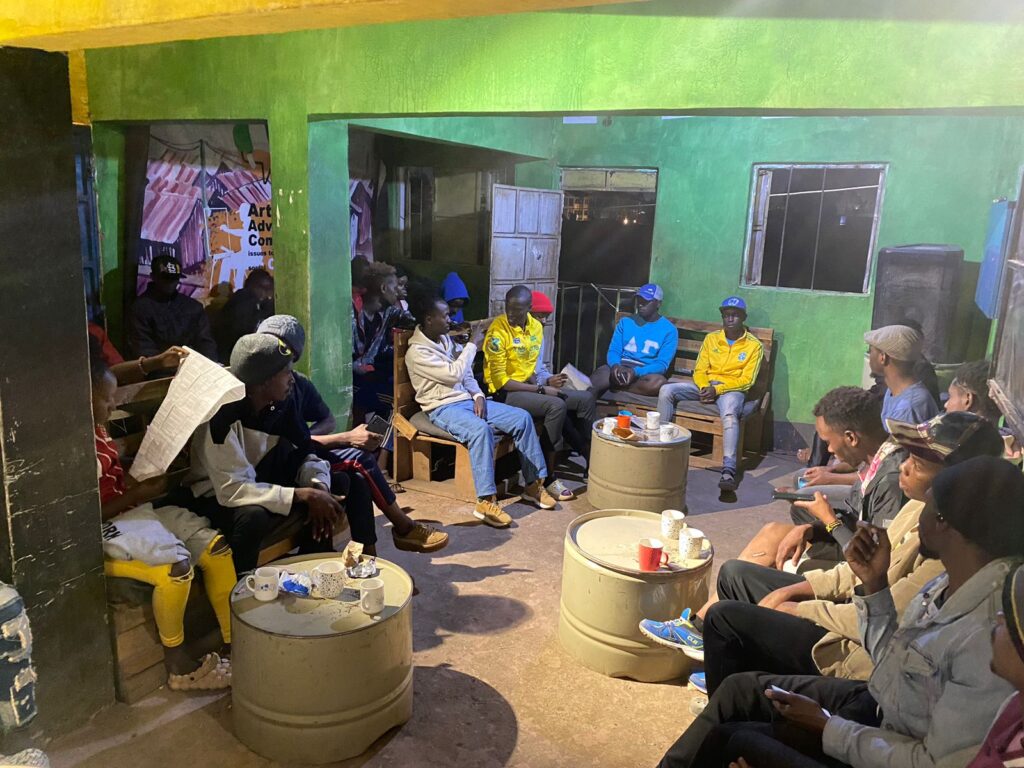
Participants during coffee bar Tuesday discussion. Photo; Nelmo Munyiri
Are young people aware of the various contraceptive options available to them? Are these contraceptives easily accessible and readily available? Building on our previous discussion from last week, our recent Coffee Bar Session was dedicated to bridging the gap between contraceptives and PEP and PrEP awareness. During the session, the moderator posed a crucial question: how many are familiar with the distinctions between PEP and PrEP? Surprisingly, the majority admitted to having never heard of these medications and was unsure how they work.
Our discussion began by acknowledging that most contraceptives, except for condoms, do not protect against HIV/AIDS or sexually transmitted infections (STIs). Contraceptives primarily serve to prevent unwanted pregnancies. Some participants expressed concerns that providing teenagers with contraceptives at an early age might encourage them to engage in sexual activities. However, it remains a fact that many young people are already engaging in unprotected sex, with or without access to contraceptives.
Currently, Kenya faces a shortage of condoms, exacerbated by shrinking donor funding, resulting in a scarcity of free condoms. Sadly, retail prices for condoms have increased, making safe sex more expensive. Various stakeholders, including the AIDS Healthcare Foundation (AHF), have warned of a potential surge in preventable HIV outbreaks, STIs, and unplanned pregnancies, especially among young people and vulnerable populations, due to the ongoing condom shortage.
Condoms have been categorized as medical devices rather than medical supplies, which has led to a 16 percent added tax. Consequently, most condom dispensers that previously provided free condoms are now unable to do so. Even our organization, Mukuru Youth Initiative, has been affected, as our dispensers no longer have condoms. As a safe space for young people, we used to distribute free condoms to 15 to 20 people daily, often providing an entire box per day. This shortage means that young people are forced to seek alternatives, engage in unprotected sex or choose abstinence.
One participant shared, “I never knew there are medications that some can take for the prevention of HIV. I only knew abstinence and condoms as the only ways to avoid getting HIV.”
What is PrEP?
PrEP stands for pre-exposure prophylaxis. It is a medication taken to prevent HIV transmission and infection before potential exposure. To start PrEP, one must first test negative for HIV. When taken consistently, PrEP can reduce the risk of HIV infection by up to 99%. PrEP requires daily use and is available with a prescription. It is particularly crucial for individuals at high risk of contracting HIV during sexual activity, such as men who have sex with men, transgender individuals, and people with HIV-positive partners.
What is PEP?
PEP stands for post-exposure prophylaxis. It consists of a short course of HIV medications prescribed to individuals who have been exposed to the virus. Unlike PrEP, which is designed for preventing HIV infection before exposure, PEP is taken after potential exposure. PEP should be initiated within 72 hours after potential exposure and typically lasts for 28 days or longer.
During our discussion, we emphasized that PrEP should only be taken by individuals at risk of HIV infection, including those with multiple sexual partners, men who have sex with men, and individuals with a history of STIs in the last 6 months. If you have tested negative for HIV and believe that PrEP is suitable for you, you should visit the nearest health center. However, it is essential to recognize that the majority of young people are at risk of HIV infection. We must use all available platforms and mediums to encourage young people to protect themselves from contracting the virus. See you on Tuesday!


Facebook Comments