

Coffee Bar Tuesday: Multipartism, Political Choice and the Road to Kenya’s 2027 Elections
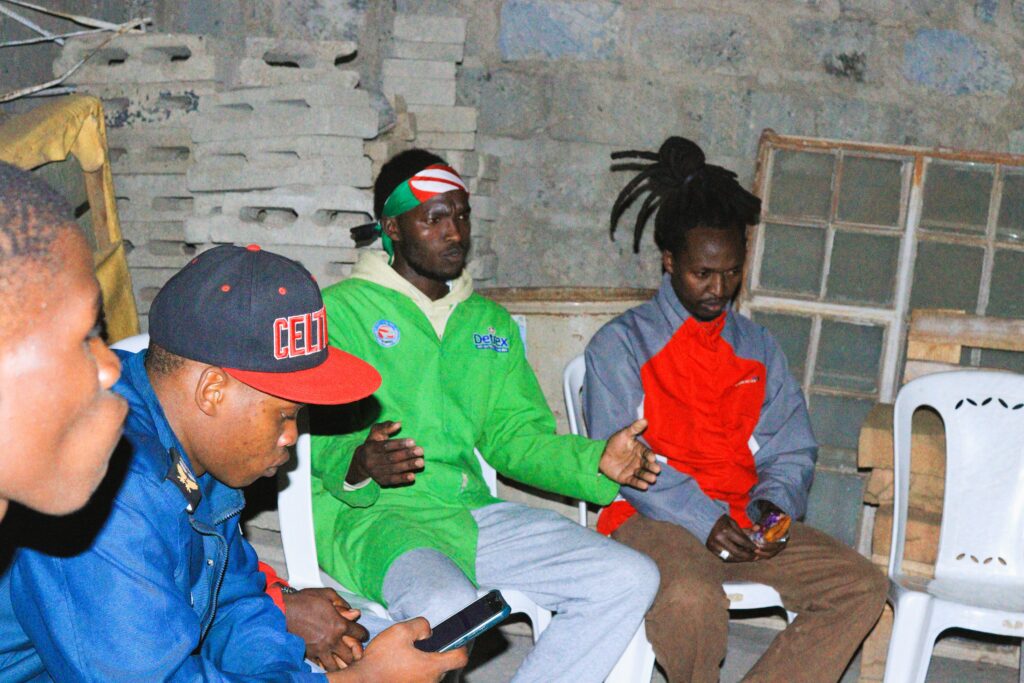
19 young people. One conversation. Many perspectives.
The latest Coffee Bar Tuesday at MuYI HUB brought together 19 young people for an open conversation on multipartism and what it means for Kenya’s 2027 General Elections.
The discussion moved beyond simply asking whether Kenya should have many political parties. Participants explored the history of political pluralism in Kenya, the quality of political parties today, the role of individual candidates, presidential coalitions, the lessons of the 1992 elections, and what citizens should consider when choosing leaders.
There was no simple answer — but there was plenty to debate.
Kenya Had Multipartism at Independence
The conversation began by looking back at Kenya’s political history.
When Kenya became independent on 12 December 1963, the country had a multiparty political system. The leading parties included KANU, KADU and the African People’s Party. KANU won the 1963 elections and formed the government under Jomo Kenyatta.
KADU is particularly important to understanding Kenya’s early experience with multipartism.
KADU had emerged partly to represent communities that feared domination by the larger groups represented within KANU. It also advocated for a federal or Majimbo system, while KANU generally favoured a more centralized system of government.
After independence, however, KADU dissolved and merged with KANU in 1964. The merger effectively removed the main opposition party and contributed to Kenya becoming a de facto one-party state.
The history raised an important question for the Coffee Bar:
What happens to democracy when political competition disappears?
Do We Need Parties — or Better Candidates?
As the discussion moved to present-day Kenya, participants were initially divided.
Some argued that individual candidates should be able to run independently, rather than being tied to political parties.
The argument was that many Kenyan political parties are heavily controlled by individuals or small groups rather than being genuinely ideology- and agenda-driven institutions.
Participants raised concerns about party leaders determining who receives tickets, the cost associated with securing party nominations and the influence that party owners can exercise over candidates.
The question therefore became:
If political parties are controlled by individuals, are voters really choosing a political agenda — or are they choosing the person who controls the party?
Some participants felt that allowing more candidates to run independently could create an opportunity to select leaders based on their track record, competence and relationship with the community, rather than simply their party affiliation.
Others, however, recognized that political parties remain important institutions for organizing political participation and building national agendas.

The 1992 Election: A Lesson in Opposition Division
One of the most interesting historical discussions focused on Kenya’s 1992 presidential election, the first multiparty presidential election after the restoration of multiparty politics in 1991.
Daniel arap Moi, running on the KANU ticket, won with 1,962,866 votes, or 36.35%. Kenneth Matiba received 26.00%, Mwai Kibaki 19.45%, and Jaramogi Oginga Odinga 17.48%.
The opposition vote was therefore spread across several candidates.
Participants discussed the long-standing argument that opposition fragmentation helped Moi retain the presidency. There were also allegations during the period that the government used administrative and political tactics that disadvantaged opposition parties. Contemporary election observers documented harassment of opposition candidates and restrictions on opposition activities in some areas.
However, there is an important historical distinction.
Kenya did not have the current 50%+1 presidential threshold in 1992. The constitutional requirement at the time was that the winning candidate receive the highest number of votes and at least 25% of the votes in five of the eight provinces. Moi met that requirement.
The current 50%+1 requirement came with the 2010 Constitution. Under Article 138, a presidential candidate must receive more than half of all votes cast and at least 25% of the votes in more than half of Kenya’s counties. If nobody meets the threshold, a fresh election is held between the qualifying top candidates.
That difference became particularly relevant to the discussion about 2027.
Could 2027 Repeat the Lesson of 1992?
Participants expressed concern about the possibility of multiple presidential candidates dividing the national vote.
The fear is straightforward: if opposition or alternative candidates enter the election separately, the vote could be divided among several candidates, potentially making it difficult for any one candidate to cross the constitutional threshold.
This raised a key question:
Does Kenya need presidential political unity while maintaining political diversity at other levels?
The emerging consensus was nuanced.
Participants supported multipartism as an important part of democracy, but argued that presidential politics may require strategic thinking about how votes are consolidated.
At the same time, they felt that voters should have the freedom to choose among different parties and candidates for MCA, MP, Senator, Woman Representative and Governor positions based on the quality of the individual candidate.
In other words:
Unity at the presidential level does not necessarily have to mean uniformity across every elective position.
Are We Getting the Leaders We Deserve?
The conversation then shifted from political parties to the quality of leadership Kenya currently has.
Participants questioned whether the existing political system is producing leaders capable of addressing the country’s challenges.
Concerns were raised about political leaders who appear more focused on political survival than public service, as well as the influence of money, party structures and political personalities in determining who gets elected.
This brought back a question raised during previous Coffee Bar sessions:
Should we choose leaders because of their party, or should we choose parties based on the leaders they produce?
Participants generally felt that track record should matter.
Before supporting a candidate, voters should be asking:
What have they done before?
What have they stood for?
Have they served their community?
Can they articulate their ideas?
Have they demonstrated integrity?
Can they understand and defend the interests of their constituents?
What happens when they disagree with those who control their party?

Fear of Constitutional Changes and Shrinking Civic Space
The conversation also touched on concerns about the relationship between political leadership and the Constitution.
Recent remarks by President William Ruto about possible constitutional changes generated concern among participants, particularly around the principle that constitutional change should be grounded in public participation and the consent of Kenyans.
Some participants expressed fear about what another presidential victory could mean for dissenting voices and political opposition.
These were expressed as concerns and fears rather than conclusions, but they reflected a broader issue raised throughout the session:
How do we build institutions strong enough to protect democracy regardless of who is in power?
The discussion emphasized that democracy cannot depend entirely on the goodwill of individual politicians. Strong institutions, an independent judiciary, accountable Parliament, active citizens, a free media and vibrant political competition are all important parts of democratic governance.
The Fear That Politicians Are All the Same
There was also an interesting contradiction in the conversation.
Some participants expressed frustration that many politicians appear to be the same, regardless of their political party.
But others argued that voters should not assume that every politician is the same without examining their record.
This brought the conversation back to individual responsibility as voters.
If we have the opportunity to examine a candidate’s history, decisions, public statements and community record, then perhaps the responsibility also falls on citizens to do more than vote according to party colours.

Where Did the Conversation End?
Interestingly, the session did not arrive at a definitive answer.
But there was broad agreement on one important principle:
Multipartism remains important for Kenya’s democracy.
Participants recognized that political competition gives citizens choices and creates space for different ideas and leadership.
At the same time, there was recognition that the existence of many political parties does not automatically produce better democracy.
Political parties need stronger internal democracy, clearer agendas, accountability and genuine representation.
And voters need to look beyond the party label.
Multipartism and 2027: The Emerging Question
Perhaps the strongest conclusion from the Coffee Bar was not that Kenyans need fewer parties or more parties.
It was that we need better political choices.
For the presidential election, participants saw the importance of political unity and strategic thinking if competing forces want to avoid repeating the fragmentation seen in 1992.
But for the other elective positions, participants emphasized the importance of allowing voters to evaluate candidates independently.
MCA. MP. Senator. Woman Representative. Governor.
The party should not automatically determine the candidate we support.
Instead, the candidate’s track record, competence, values and commitment to the community should matter.
The bigger challenge for 2027 may therefore be:
Can Kenya maintain the political diversity that multipartism provides while ensuring that voters make informed choices based on competence, accountability and agenda — rather than simply party, personality or political allegiance?
That is a conversation worth continuing.
☕ Coffee Bar Tuesday
With 19 young people participating, this week’s Coffee Bar demonstrated once again the importance of creating spaces where young people can discuss politics without being told what to think.
The conversation was not about finding one political position.
It was about asking better questions.
And as Kenya moves toward 2027, perhaps that is where meaningful political participation begins:
Question the party. Question the candidate. Question the agenda. And, most importantly, question your own vote.
Coffee Bar Tuesday — Speak. Listen. Engage. Impact.


Facebook Comments